Meeting in the Middle and Striding Into the High Grass:A Lesson Remembered During My Daily Dog Walk
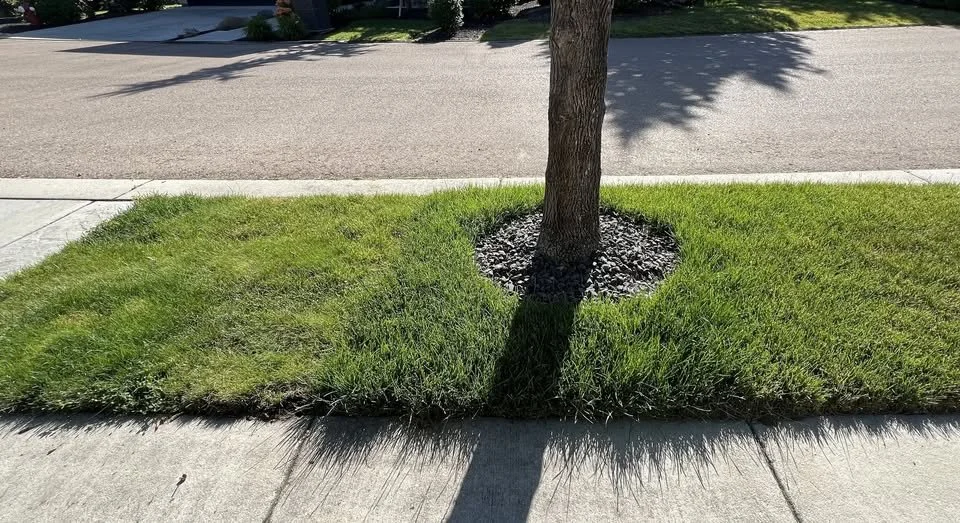
While out walking my two Frenchies, Ivy and Rowan the other day, I came across this curious sight—two side-by-side front yards with meticulously-cut grass, but with an overgrown “common area” in between them.
The street where I was walking has many such common areas between the homes’ front sidewalks and the road, but most residents simply go ahead and mow those common areas, so that the grass lining the street is all the same height, and a sweeping glance up and down the street imparts a sense of continuity and uniformity. But this particular patch of grass stuck out like a green thumb--plainly showing the “hard stop” lines for both yards, ending at the precise edge of their own property lines and not venturing an inch further.
Perhaps the grass had been left high because it surrounded a small tree, though the grass around the other similar trees up and down the street had somehow been cut. At any rate, the visual made me think of what can happen in life when we refuse to reach out and meet each other in the middle, especially to resolve a personal conflict or disagreement. Perhaps our reluctance to do this is a habit. Perhaps it’s the sting of a past offense taken, or a fear of engaging with someone we don’t know well. Perhaps it’s because we simply feel too tired or overwhelmed to expend a drop more of effort than we are already expending on our own side of the grass.
We’ve all had those feelings and those challenges, and that patch of grass reminded me that the longer we allow conflicts and disagreements to go on, the higher the barriers between us can become. And when that has already happened, it’s truly inspiring when a grasscutter comes along. Here’s a story about one:
Many years ago, when my children were small, a woman I knew became angry with me. In a phone call, she strongly expressed her displeasure. As it happened, her anger was somewhat misplaced—but I was so hurt and offended that I didn’t even try to explain. I just let her finish the tirade, and I ended the call.
I continued to come across this woman in many of my social circles, but now, instead of interacting as friends, we avoided each other. I never told anyone except my late husband about the incident, and I tried my best to simply forget it. But I couldn’t. There I was, at the edge of my property line, nursing my hurt and offense and refusing to move an inch further. And she was at the edge of hers, still angry.
And the grass in between us grew higher and higher—gradually blocking us out from each other’s view
And then, a stunning thing happened. A year after our conversation, this woman suddenly strode right into the high grass. She called me to apologize. In that second, much different phone conversation, she told me that she’d gradually come to realize that her anger had been unreasonable, and that she knew that in order to come to terms with that, she needed to ask my forgiveness. A YEAR LATER, folks. A. Year. Later.
Did I think less of her for doing that after so much time had passed? Did I huffily hunker down on my side of the high grass and refuse to budge? Did I chew her out and hang up?
Of course not. I wasn’t angered or offended. I was…awestruck.
It was one of the first times I ever remember seeing someone stride into the high grass, entirely of their own free choice, to repair a relationship with someone on the other side. She didn’t care how long it had been or how overgrown the grass had become. She just did it.
That earthshaking, grass-obliterating phone call took place nearly forty years ago—but it’s served as an example to me for nearly my entire adult life. And the sight of that high grass on my dog walk last week reminded me of how important it is to reach past anger, offense, fear and my own self-interest to build relationships with other people--and to not let the grass grow under my feet while I get to it.